

Manos Tsakiris
Professor of Psychology,
Royal Holloway, University of London
Director of the Centre for the Politics of Feelings,
University of London

Manos Tsakiris directs the Lab of Action & Body at Royal Holloway University of London and the Centre for the Politics of Feelings at the School of Advanced Study, University of London. His interdisciplinary research explores how bodily and emotional states shape self-awareness, social cognition, and socio-political behaviour.
Trained in psychology, philosophy, and cognitive neuropsychology, he completed his PhD at the Institute of Cognitive Neuroscience, UCL, and joined Royal Holloway in 2007. He has led major international research programmes such as the Plastic Self ERC Starting Grant, the interdisciplinary Body & Image in Arts & Science (BIAS) project at the Warburg Institute, and the INtheSELF ERC Consolidator project. His most recent research looks at the ways in which our emotions shape and are shaped by politics. He is also interested in the development of political cognition in early adolescence and he is the Science Lead of the Marie Skłodowska-Curie Doctoral Network ‘Interdisciplinary Perspectives on the Politics of Adolescence and Democracy’ (IP-PAD).
His work has received international recognition through awards including the Young Mind and Brain Prize in 2014, of the 22nd Experimental Psychology Society Prize in 2015, and the NOMIS Foundation Distinguished Scientist Award in 2016. He is also an elected Fellow of the Association for Psychological Science and Academia Europaea.
Alongside his academic research, he works across sectors on questions of human behaviour, perception, and social cognition. His experience spans research leadership, governance (e.g. elected academic member of the Council of Royal Holloway, University of London), policy advice (e.g. Joint Research Centre of the European Commission), public engagement, and collaboration with cultural and industry partners such as Tate Modern, the Science Museum, the Barbican Centre, and the Royal Opera House.
Featured recent publications


GPT-4 can match—and sometimes surpass—human experts in political persuasion, suggesting AI may soon play a powerful role in shaping democratic discourse.
Hackenburg, K., Ibrahim, L., Tappin, B.M. & Tsakirs M (2025) Comparing the persuasiveness of role-playing large language models and human experts on polarized U.S. political issues. AI & Soc . https://doi.org/10.1007/s00146-025-02464-x
Future anxiety is shaping how young people think and act politically, while revealing sharper ideological shifts among young men.
Borghi, O., Niraki, M., Seremeta, E., Smets, K., & Tsakiris, M. (2025). Facing a dark future: Young people’s future anxiety and political attitudes in the UK and Greece. advances.in/psychology, 2, e555124. https://doi.org/10.56296/aip00042
As many have argued, one of the biggest casualties of the rise of Artificial Intelligence (AI) will be the erosion of societal trust. In a set of studies we looked at how people perceive faces generated by AI. Interestingly, these faces look more real than real faces So, what are the consequences for social trust?
Tucciarelli, R., Vehar, N., Chandaria, S., & Tsakiris, M. (2022). On the realness of people who do not exist: The social processing of artificial faces. IScience, 25(12), 105441. https://doi.org/10.1016/j.isci.2022.105441 |read the article here
All Videos
All Videos
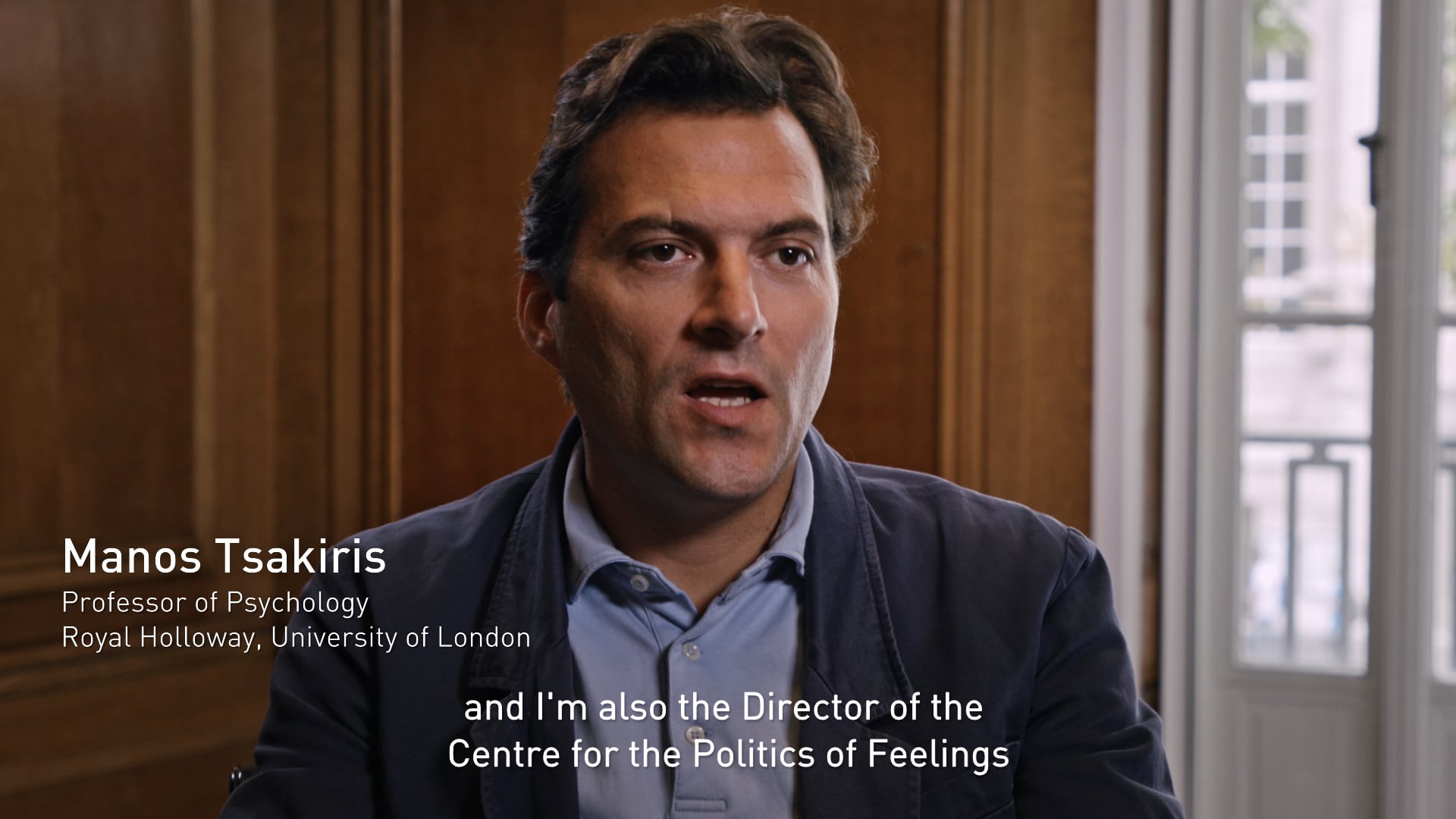
NOMIS Insight | Manos Tsakiris
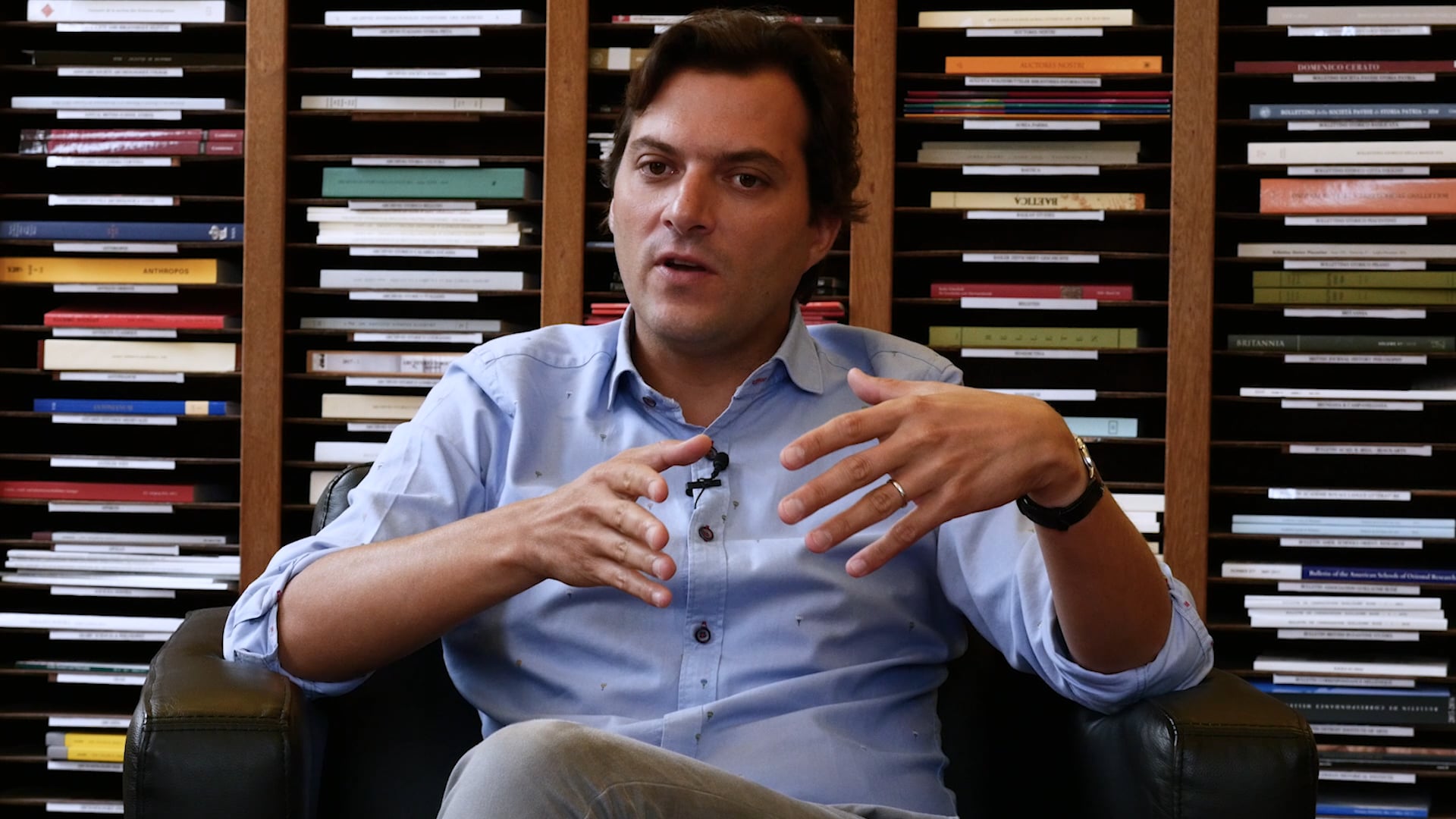
Manos Tsakiris, 2016 NOMIS Distinguished Scientist
